External wall insulation plays an important role in building energy performance, indoor comfort, and fire safety. Selecting a suitable insulation material requires careful consideration of the building design, local regulations, and the performance requirements of the complete wall system.
Rock wool insulation, also known as stone wool insulation, is a mineral-based material used in various external wall applications. Its thermal insulation properties and non-combustible characteristics make it a suitable option for many wall systems when the selected product meets the relevant technical requirements.
This guide explains the benefits of rock wool external wall insulation and the key factors to consider when choosing insulation boards for a construction project.
1. What Is Rock Wool External Wall Insulation?
Rock wool external wall insulation uses mineral wool products as part of a building’s exterior wall assembly.
Depending on the construction method, insulation boards may be installed as part of an external thermal insulation composite system or within a ventilated facade assembly.
The complete system may include insulation boards, mechanical fixings, adhesives, supporting structures, protective layers, and exterior finishes.
The appropriate product and installation method depend on the facade design, substrate, building height, wind loads, local climate, and applicable building regulations.
2. Key Benefits of Rock Wool for External Walls
Thermal Insulation
Rock wool helps reduce heat transfer through building walls. When appropriately selected and installed, it can contribute to lower heating and cooling demand and improve indoor thermal comfort.
Thermal performance depends on the product’s thermal conductivity, insulation thickness, installation quality, and the design of the complete wall assembly.
Buyers should review relevant thermal conductivity data and select thickness according to the project’s energy performance requirements.
Non-Combustible Insulation Properties
Fire safety is an important consideration in facade design, particularly for multi-storey and commercial buildings.
Rock wool products can offer non-combustible insulation properties. However, the fire performance of an external wall system also depends on its other components, construction details, cavity barriers, fixings, and installation quality.
Project teams should verify the applicable product classifications, system test reports, and local regulatory requirements before selecting a facade insulation system.
Acoustic Performance
External wall assemblies can help reduce the transmission of outdoor noise into indoor spaces.
Rock wool’s fibrous structure can contribute to sound absorption in suitable constructions. Actual acoustic performance depends on the complete wall assembly, including the wall structure, insulation, joints, and interior and exterior finishes.
Where acoustic performance is a design priority, relevant test data should be reviewed.
3. How to Choose Rock Wool Board Density
Density is an important specification when selecting rock wool boards for external wall insulation.
Different facade systems may require different combinations of density, mechanical strength, dimensional stability, and thermal performance.
For example, the requirements of a mechanically fixed ventilated facade may differ from those of an adhesive-based external wall insulation system.
Density should therefore be selected according to the system design and applicable technical specifications rather than using a single value for every project.
Buyers should also confirm the product’s relevant mechanical properties and suitability for the intended fixing method.
4. Choosing the Right Insulation Thickness
The required insulation thickness depends on several factors:
- Local climate and outdoor temperature conditions
- Required thermal resistance or energy performance
- Existing wall construction
- Available installation space
- Applicable building energy codes
A thicker insulation layer generally provides greater thermal resistance when other conditions remain comparable. However, the final specification should be determined through appropriate thermal calculations and project requirements.
For renovation projects, the existing wall condition and available space may also influence the selection.
5. Ventilated Facades and External Wall Insulation Systems
Rock wool can be used in different types of external wall construction, provided the selected product is designed and approved for the intended application.
Ventilated Facade Systems
Ventilated facades typically include an exterior cladding layer, a supporting structure, and a cavity that allows ventilation and drainage according to the system design.
Rock wool insulation may be installed behind the cladding. Product selection should account for the fixing arrangement, exposure conditions, wind loads, and required fire performance.
The design of cavity barriers and other fire safety measures must comply with the applicable regulations.
External Thermal Insulation Composite Systems
Some external wall systems use insulation boards installed with adhesives and mechanical fixings, followed by reinforcement and exterior finishing layers.
For these applications, buyers should confirm that the insulation board is compatible with the complete system and meets the required mechanical and fire performance specifications.
Components should be selected and installed according to the system manufacturer’s instructions.
6. What Should Buyers Check Before Purchasing?
Before ordering rock wool boards for an external wall project, consider the following points.
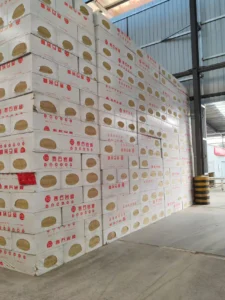
Product dimensions: Confirm length, width, and thickness according to the project drawings.
Density and mechanical properties: Verify the specifications required by the facade system.
Thermal conductivity: Review the applicable test data and required thermal performance.
Fire documentation: Confirm relevant classifications and system documentation for the intended application.
Installation compatibility: Ensure the product suits the fixing method, substrate, and facade design.
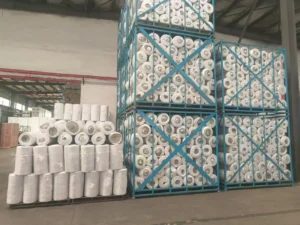
Packaging and quantity: Confirm the number of boards, total area or volume, packaging requirements, and delivery arrangements.
Providing clear technical information helps the manufacturer assess production feasibility and prepare an appropriate quotation.
7. Rock Wool External Wall Insulation from Taishi
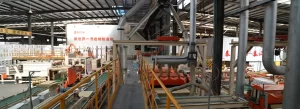
Taishi Energy Conservation Materials Co., Ltd. is a rock wool manufacturer in China, producing insulation boards and slabs for building and industrial applications.
Our product specifications can be discussed according to project requirements, including dimensions, thickness, density, and intended application, subject to production feasibility.
For external wall insulation projects, buyers can share the following details when contacting us:
- Facade system type
- Required board dimensions and thickness
- Required density
- Estimated order quantity
- Applicable technical standards
- Destination country or port
These details help us understand the project and discuss suitable product options.
Conclusion
Rock wool external wall insulation can contribute to building thermal performance and provide non-combustible insulation properties when the selected product is suitable for the application and incorporated into a properly designed system.
Choosing the right board requires consideration of thermal performance, density, thickness, mechanical properties, fire requirements, and compatibility with the facade system.
Taishi Energy Conservation Materials Co., Ltd. manufactures rock wool insulation products in China for building and industrial applications.
Looking for rock wool boards for an external wall project? Contact Taishi Rock Wool to discuss your technical specifications and project requirements.