1. What Is Rock Wool Used for in Fire Doors?
Fire doors are designed to help restrict the spread of fire and smoke between different areas of a building. Depending on the door design, their construction may include steel or other facing materials, a core material, internal reinforcements, seals, hardware, and fixing components.
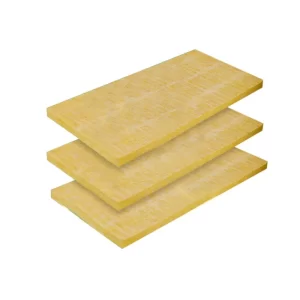
Rock wool, also known as stone wool, is a mineral-fiber insulation material used in various building and industrial applications. Certain rock wool products may be considered for fire door core applications when their properties meet the door manufacturer’s technical specifications and the requirements of the tested door assembly.
For fire door manufacturers, selecting the appropriate core material involves more than choosing an insulation product with a suitable thickness. The material must be compatible with the door construction, manufacturing process, and applicable fire-resistance requirements.
2. Why Is Core Material Selection Important?
The core is one of several components that contribute to a fire door’s overall performance. The choice of material can affect manufacturing, structural behavior, insulation performance, and the ability to reproduce a tested door design.
Key considerations include the following.
Fire Performance
Fire doors must meet the applicable fire-resistance requirements for their intended use. The performance of the complete door assembly depends on its materials, construction, dimensions, seals, hardware, installation, and test or certification requirements.
A rock wool board’s non-combustibility or individual material test result does not, by itself, establish a fire-resistance rating for a finished door.
Door manufacturers should therefore verify that the selected core material is permitted by the relevant door design and supporting test documentation.
Thermal Insulation
Thermal conductivity is an important property when assessing the insulation performance of a core material. It is commonly expressed in W/(m·K).
When comparing products, buyers should check that the reported values are based on comparable test methods and conditions. The core material’s thermal performance should be considered alongside the complete door construction rather than in isolation.
Dimensional Stability
The core material must fit the intended door design and remain compatible with the manufacturing process. Board dimensions, thickness tolerances, cutting requirements, and handling characteristics may all influence production.
Consistent dimensions can also help manufacturers plan material usage and reduce unnecessary cutting waste.
Mechanical Properties
Depending on the door design, manufacturers may need to evaluate the core’s compressive strength, internal integrity, handling durability, or other specified mechanical properties.
The relevant requirements should come from the door design and its validation process. No single density value guarantees suitability for every fire door.
3. How to Choose the Right Rock Wool Core Material
Before sourcing rock wool for fire door production, manufacturers should identify the technical requirements of the intended door assembly.
Confirm the Required Density
Rock wool products are available in different densities for different applications. The appropriate density depends on the product design, mechanical requirements, and manufacturing process.
A higher density is not automatically better. Buyers should specify the required density range or provide the relevant technical specification so the manufacturer can assess product suitability.
Determine the Required Thickness
The core thickness must match the intended door construction. Buyers should confirm the required thickness, finished door dimensions, and any restrictions related to the internal frame or facing materials.
If several door models are produced, it is useful to list the required thickness for each model before requesting a quotation.
Specify Board Dimensions
The dimensions of the core material should be coordinated with the door’s height, width, internal structure, and cutting process.
When discussing custom dimensions with a supplier, provide the required length, width, thickness, dimensional tolerances, and estimated order quantity. The supplier can then confirm manufacturing feasibility.
Review Technical Documentation
Ask for the relevant product data and test documentation available for the specific material. Check the stated test methods, product identification, and the scope of the results.
Where the finished fire door must comply with a particular standard or certification scheme, confirm the acceptability of the proposed core material with the responsible testing body or certification organization.
4. Rock Wool Boards or Other Core Formats?
The most suitable material format depends on the door design and manufacturing process.
Rock wool boards
Rigid or semi-rigid boards may be appropriate where the design requires defined dimensions and a board-shaped core. Buyers should confirm the required density, thickness, dimensions, and mechanical properties.
Other mineral wool formats
Some applications may use different mineral-wool formats, but suitability depends on the specific door construction and the manufacturer’s approved process. A material format used for general building insulation should not automatically be assumed suitable for a fire door.
Before changing from one core material or format to another, manufacturers should verify whether the change affects the tested or approved door design.
5. Common Sourcing Mistakes to Avoid
Fire door manufacturers and purchasing teams can avoid unnecessary delays by checking several details before ordering.
– Selecting by density alone: Density does not establish complete fire door performance.
– Assuming all rock wool products are interchangeable: Different products may have different properties and intended applications.
– Ignoring dimensional tolerances: Inconsistent dimensions can complicate cutting and assembly.
– Overlooking documentation requirements: The project may require specific test reports or approved materials.
– Changing the core without checking the door design: Material changes may affect the validity of existing test or certification evidence.
– Requesting a quotation without specifications: Missing dimensions, quantities, and technical requirements can lead to repeated clarification.
A clear product specification helps both the buyer and manufacturer determine whether a product is technically appropriate before moving forward with commercial discussions.
6. What Information Should You Send to a Rock Wool Manufacturer?
When requesting a quotation for fire door core materials, prepare as much of the following information as possible:
Information Details to provide
Application Fire door core and intended door design
Density Required density or acceptable range
Thickness Required core thickness
Dimensions Length, width, and tolerances
Mechanical requirements Any specified strength or handling requirements
Compliance requirements Applicable standards and documentation needs
Order quantity Trial quantity and estimated regular demand
Destination Country and delivery location
Sample requirements Whether samples are needed for preliminary evaluation
If you already have a technical specification sheet, product drawing, or list of required properties, sharing it with the manufacturer can make the initial discussion more efficient.
A sample may help with preliminary dimensional and material evaluation. However, a sample inspection does not replace the required testing of the complete fire door assembly.
7. Sourcing Rock Wool from Taishi
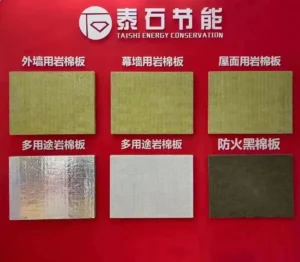
Taishi Energy Conservation Materials Co., Ltd. is a rock wool manufacturer in China, producing insulation materials for building and industrial applications.
Taishi offers a range of rock wool product specifications and can discuss product requirements with customers seeking materials for specific manufacturing applications.
For companies evaluating rock wool for fire door production, useful starting information includes the required density, thickness, board dimensions, mechanical properties, applicable standards, and estimated quantity.
Based on the information provided, the Taishi team can check relevant product options and confirm which specifications require further technical assessment. Customized dimensions and sample arrangements can also be discussed, subject to product feasibility and availability.
If your fire door design has specific material approval or testing requirements, please share those requirements at the beginning of the discussion so the proposed product can be evaluated appropriately.
8. Request Information for Your Fire Door Project
Looking for a rock wool manufacturer to discuss core materials for your fire door production?
Contact Taishi Rock Wool with your required specifications and estimated order quantity. Our team can discuss available product options, dimensions, and the information needed for a quotation.
To help us understand your requirements, please include:
– Required density and thickness
– Core dimensions
– Estimated quantity
– Intended door construction
– Applicable technical or compliance requirements
Contact Taishi Rock Wool to discuss your product requirements and request a quotation.