Rock wool sandwich panels are widely used in industrial buildings, warehouses, commercial facilities, and other construction projects where thermal insulation and fire performance are important. Selecting the right rock wool core is essential for panel manufacturing, product performance, and installation efficiency.
For sandwich panel manufacturers and insulation material buyers, the selection process involves more than choosing a density or thickness. Core dimensions, fibre orientation, mechanical properties, thermal conductivity, and compatibility with the panel production process should also be considered.
In this guide, we explain the key factors to consider when choosing rock wool for sandwich panels and what buyers should confirm before placing an order.
1. Why Is Rock Wool Used in Sandwich Panels?
Rock wool is manufactured from mineral raw materials, including basalt. Its properties make it suitable for various building insulation applications.
The main reasons for using rock wool in sandwich panels include:
Fire performance: Rock wool is generally classified as non-combustible, depending on the applicable product standard and test results. It can contribute to the fire performance of a sandwich panel system, although the performance of the complete panel depends on its full construction and testing.
Thermal insulation: Rock wool helps reduce heat transfer through building envelopes. The required insulation performance depends on the core thickness, thermal conductivity, climate, and building design.
Acoustic performance: The fibrous structure of rock wool can absorb sound and help reduce noise transmission when incorporated into an appropriately designed panel system.
Versatile applications: Rock wool sandwich panels are used in industrial workshops, warehouses, commercial buildings, and certain temperature-controlled facilities, subject to the panel system’s design and performance requirements.
Choosing the appropriate core material helps manufacturers balance these requirements with production and installation needs.
2. How to Choose the Right Rock Wool Density
Density is one of the key parameters when selecting a rock wool core. However, a higher density does not automatically mean that a product is better for every sandwich panel application.
The appropriate density depends on several factors:
- Panel design: The core must be compatible with the panel structure and intended use.
- Mechanical requirements: Compressive strength, tensile strength perpendicular to the faces, and other relevant properties should meet the panel manufacturer’s specifications.
- Fire performance: The complete panel assembly must satisfy the applicable fire requirements.
- Production process: The core should be suitable for the manufacturer’s bonding, cutting, handling, and assembly processes.
- Project specifications: Requirements may vary by building type, market, and applicable standards.
Before ordering, buyers should specify the required density and confirm the relevant mechanical properties with the manufacturer. Density alone is not sufficient to determine whether a rock wool core is suitable.
3. How to Select the Appropriate Thickness
Rock wool core thickness affects thermal resistance, panel construction, and overall product dimensions.
When selecting thickness, buyers should consider:
Thermal insulation requirements: Thicker insulation generally provides greater thermal resistance when other conditions are comparable. The required thickness should be determined from the target thermal performance and project design.
Panel dimensions: The core thickness must match the intended sandwich panel construction and production specifications.
Building application: Industrial roofs, external walls, internal partitions, and temperature-controlled buildings may have different insulation requirements.
Applicable regulations: Local building codes and project specifications may establish minimum thermal or fire-performance requirements.
It is advisable to confirm the required thickness with the panel design team before mass production. This helps reduce dimensional inconsistencies and unnecessary material processing.
4. Why Do Core Dimensions and Fibre Orientation Matter?
For sandwich panel manufacturers, the physical format of the rock wool core can be just as important as its material properties.
Core Dimensions
The length, width, and thickness of the core should match the panel design and production process. Incorrect dimensions can increase cutting requirements, material waste, and production time.
Before placing an order, confirm:
- Required length and width
- Core thickness and dimensional tolerances
- Cutting or strip-format requirements
- Whether standard or customized dimensions are needed
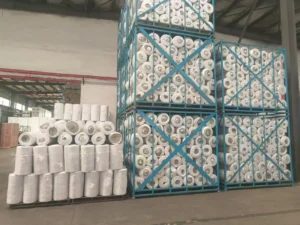
- Packaging and handling requirements
Fibre Orientation
Fibre orientation can affect the mechanical behaviour of rock wool and its suitability for different panel constructions.
Depending on the product design, sandwich panel manufacturers may require a specific fibre orientation or a particular arrangement of rock wool strips. The correct configuration should be determined by the panel design, required mechanical properties, and manufacturing process.
Buyers should communicate their requirements clearly and confirm the proposed core format with the manufacturer before production.
5. What Should Buyers Check Before Ordering Rock Wool Cores?
Before purchasing rock wool for sandwich panels, buyers should prepare a clear technical specification.
The following checklist can help simplify communication between the buyer and manufacturer.
| Item | What to Confirm |
|---|---|
| Application | Roof panels, wall panels, cold-room panels, or other uses |
| Density | Required nominal density and tolerances |
| Thickness | Required core thickness |
| Dimensions | Length, width, and dimensional tolerances |
| Fibre orientation | Required orientation or strip arrangement |
| Thermal conductivity | Declared value and applicable test method |
| Mechanical properties | Relevant strength and performance requirements |
| Fire performance | Applicable standards and supporting test documentation |
| Production compatibility | Cutting, bonding, handling, and assembly requirements |
| Packaging | Packaging format, loading, and transport requirements |
Not every project requires the same documents or test methods. Buyers should identify the standards applicable to their target market and confirm the available documentation with the manufacturer.
6. Standard and Customized Rock Wool Core Solutions
Standard rock wool products can be suitable for many common insulation applications. However, sandwich panel manufacturers may need specific dimensions, densities, thicknesses, or core configurations to match their production lines.
Customized solutions may include:
- Different density and thickness combinations
- Specific cutting dimensions
- Rock wool strips for sandwich panel production
- Non-standard formats subject to manufacturing feasibility
- Product documentation based on the agreed specification
Working directly with a rock wool manufacturer can help buyers discuss technical requirements before production and clarify whether a requested specification is feasible.
Taishi Rock Wool manufactures rock wool insulation products for building and industrial applications. Buyers can contact our team to discuss required product dimensions, density, thickness, and application-specific needs.
The availability of customized products depends on the requested specification and production feasibility.
7. Why Work with an Experienced Rock Wool Manufacturer?
For sandwich panel producers, choosing a manufacturer involves more than comparing product descriptions. Consistent specifications, clear technical communication, quality documentation, and the ability to discuss customized requirements are also important.
When evaluating a manufacturer, consider the following questions:
- Can the manufacturer produce the required density and thickness?
- Can the requested core dimensions and formats be accommodated?
- Are relevant technical data and test documents available?
- Can the manufacturer clarify mechanical properties and fibre orientation?
- Can the products be prepared according to the agreed packaging and export requirements?
Discussing these points early can help buyers assess compatibility and reduce misunderstandings during ordering and production.
8. Request Rock Wool Core Specifications for Your Sandwich Panel Project
If you are sourcing rock wool for sandwich panel manufacturing, preparing the main technical requirements will help the manufacturer evaluate your request more accurately.
When contacting a supplier, include the following information where available:
- Intended application: roof panels, wall panels, or other sandwich panels
- Required density and thickness
- Core length, width, and dimensional tolerances
- Fibre orientation or strip configuration
- Required thermal, mechanical, and fire-performance specifications
- Estimated order quantity
- Destination country and applicable standards
Looking for a rock wool manufacturer for your sandwich panel production?
Contact Taishi Rock Wool to discuss your core material requirements, customized dimensions, and available technical documentation. Our team can review your specifications and help identify a suitable product format for your application.
Frequently Asked Questions
Is rock wool suitable for sandwich panels?
Rock wool can be used as a core material in sandwich panels designed for thermal insulation and fire performance. Suitability depends on the core properties, panel construction, bonding system, and applicable project requirements.
What density is best for rock wool sandwich panels?
There is no single density that is best for every application. The appropriate density depends on the panel design, required mechanical properties, applicable standards, and manufacturing process.
What thickness should I choose?
The required thickness depends on the target thermal performance, building design, panel construction, and local requirements. Confirm the specification with the panel designer or project engineer.
Can rock wool core dimensions be customized?
Customized dimensions may be possible depending on the manufacturer’s production capabilities and the requested specification. Buyers should confirm the required length, width, thickness, tolerances, and core configuration before ordering.
What information should I provide when requesting a quotation?
Provide the application, density, thickness, dimensions, fibre orientation, required performance standards, estimated quantity, and destination country. Technical drawings or product specifications are also helpful when available.
What is the difference between rock wool board and rock wool strips?
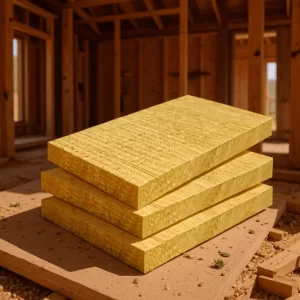
Rock wool boards are supplied as board-shaped insulation products, while strips are cut or manufactured in formats intended for particular applications, including some sandwich panel production processes. The suitable format depends on the panel design and production requirements.