When choosing insulation materials for a building or industrial project, thermal performance is only one part of the decision. Fire safety, acoustic performance, density, thickness, dimensional requirements and application conditions can all affect the final choice.
Rock wool insulation, also known as stone wool insulation, is widely used in construction and industrial applications because it combines thermal insulation, acoustic performance and fire protection in one material.
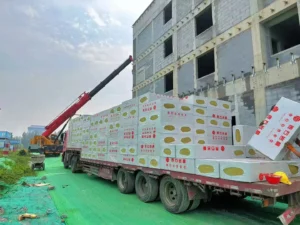
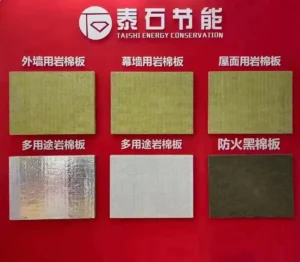
As a rock wool manufacturer in China, Taishi Rock Wool produces rock wool boards, rolls, blankets and lamella mats for different insulation applications and project requirements.
What Is Rock Wool Insulation?
Rock wool is a mineral fiber insulation material manufactured primarily from natural basalt and other mineral raw materials.
During production, the raw materials are melted at high temperatures and processed into fine mineral fibers. These fibers are then formed into insulation products with different densities, thicknesses and dimensions according to their intended applications.
The resulting structure contains a large amount of trapped air, which helps reduce heat transfer and contributes to the material’s thermal insulation performance.
Depending on the product structure and application, rock wool can also provide acoustic and fire protection properties.
Why Is Rock Wool Used for Insulation?
Rock wool is selected for a wide range of applications because it offers several important characteristics.
1. Thermal Insulation
Rock wool helps reduce heat transfer through walls, roofs, facades and other building elements.
Its thermal performance depends on factors such as product density, thickness, fiber structure and operating conditions. Selecting the appropriate thickness and product specification is therefore important for achieving the required insulation performance.
2. Fire Protection
One of the important characteristics of mineral wool insulation is its non-combustible nature.
Rock wool made from mineral fibers can be used in applications where fire protection is an important consideration. It is commonly used in building envelopes, partitions, technical insulation and other areas where fire safety requirements need to be considered.
For projects with specific fire-resistance requirements, the complete system design and applicable local standards should always be taken into account.
3. Acoustic Performance
The fiber structure of rock wool can help absorb sound and reduce the transmission of airborne noise.
For this reason, rock wool is used in applications such as:
- Interior partitions
- Walls and ceilings
- Commercial buildings
- Industrial facilities
- Mechanical rooms
- HVAC and technical areas
The required density, thickness and installation method depend on the acoustic objective and system design.
4. Versatile Applications
Rock wool products can be manufactured in different forms and specifications, making them suitable for many applications.
Common applications include:
- External wall insulation
- Facade insulation
- Roof insulation
- Internal wall insulation
- Partition walls
- Floor insulation
- Ventilated facade systems
- Industrial insulation
- HVAC and technical insulation
- Equipment and vessel insulation
Common Types of Rock Wool Products
Different projects require different product formats.
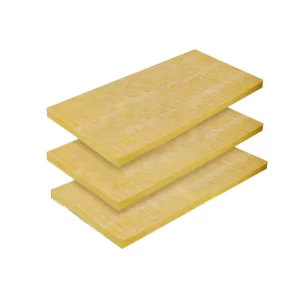
Rock Wool Boards and Slabs
Rock wool boards are rigid or semi-rigid insulation products commonly used for walls, roofs, facades, partitions and other building applications.
Depending on the project, boards can be produced with different densities and thicknesses.
Rock Wool Rolls and Blankets
Rolls and blankets are flexible insulation products that can be convenient for larger surfaces and applications where flexibility is required.
They are commonly used for building and industrial insulation.
Rock Wool Lamella Mats
Lamella products consist of mineral wool strips arranged in a specific orientation and are designed for applications requiring flexibility and good surface adaptation.
They can be used for various wall, facade and technical insulation applications.
Customized Rock Wool Products
Not every project uses standard dimensions.
Depending on production conditions and technical requirements, rock wool products can be customized according to dimensions, thickness, density and other specifications.
For large-volume projects, customized specifications can help better match the installation method and system requirements.
How to Choose the Right Rock Wool Product?
Choosing rock wool should start with the application rather than simply selecting the highest density or thickest product.
Several factors should be considered.
Application
First determine where the insulation will be installed.
Is it for:
- Exterior walls?
- Roofing?
- Internal walls?
- Partitions?
- Facades?
- Industrial equipment?
- HVAC systems?
- Technical insulation?
Different applications require different product characteristics.
Thickness
The required thickness depends on the thermal insulation target, local climate, building structure and applicable regulations.
For some projects, a thicker product may be required to achieve the desired thermal performance. In other applications, space limitations may be an important consideration.
Density
Density should be selected according to the application and system requirements.
Higher density does not automatically mean that a product is better for every application. The appropriate density should be determined according to the intended use, mechanical requirements and overall system design.
Thermal Conductivity
Thermal conductivity is one of the key parameters used to evaluate insulation performance.
A lower thermal conductivity generally indicates better thermal insulation performance under comparable testing conditions.
However, thermal conductivity should be considered together with thickness, installation conditions and the required thermal resistance of the complete system.
Fire Requirements
For projects where fire safety is important, the product’s reaction-to-fire classification and the fire performance of the complete building system should be considered.
Always check the applicable local regulations and project specifications before selecting the product.
Rock Wool for Building and Industrial Applications
Rock wool is not limited to residential buildings.
It is also used in commercial, industrial and technical applications where thermal insulation and fire protection are important.
Typical sectors include:
- Commercial construction
- Residential construction
- Industrial buildings
- Warehouses
- Manufacturing facilities
- HVAC systems
- Energy and utility facilities
- Mechanical and technical insulation
- Infrastructure projects
For industrial applications, the required product specifications can vary significantly depending on operating temperature, equipment geometry, installation conditions and project standards.
What Should Buyers Ask a Rock Wool Manufacturer?
For distributors, contractors, EPC companies and insulation specialists, choosing a manufacturer is not only about the product itself.
Before placing an order, it can be useful to confirm:
- Available product types
- Thickness range
- Density range
- Standard dimensions
- Customized dimensions
- Thermal conductivity data
- Fire performance documentation
- Applicable test reports and certifications
- Packaging requirements
- Loading and shipping arrangements
- Production capacity
- Technical support for project specifications
Clear technical requirements at the beginning of a project can help avoid unnecessary specification changes later.